
 Get Garment Guides
Garment Guides
Why You Should Clean and Condition Leather Garments
Donate Gently Used Professional Attire Through 3/28.
Read tips, tricks, and how-to’s on our Fabric of Life blog.
Garment Guides
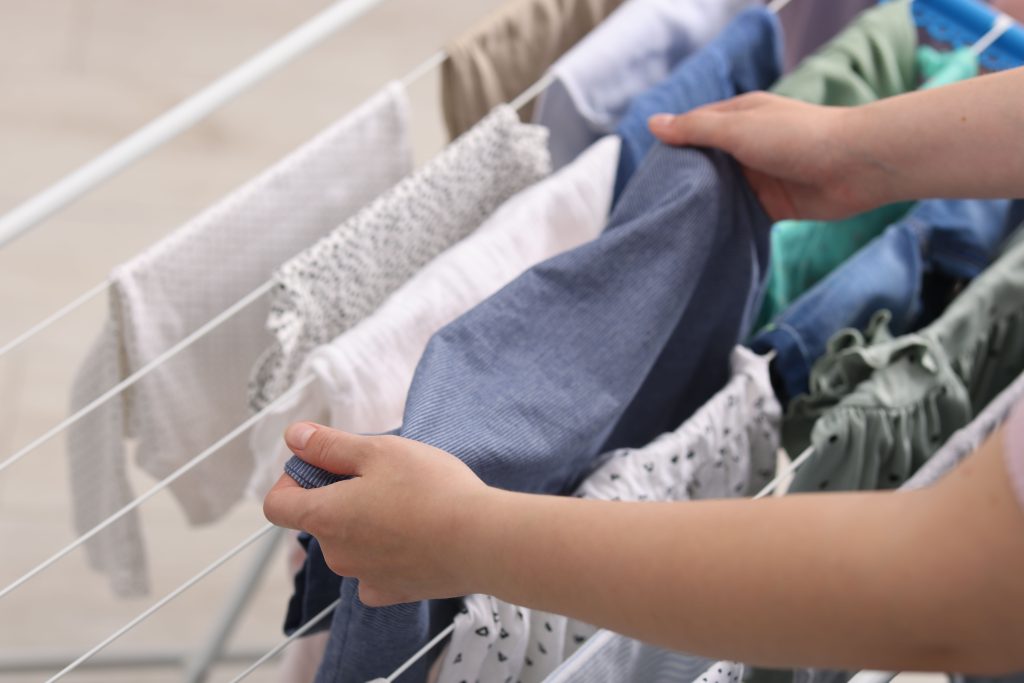
Anyone who’s lived through a Chicago summer knows the drill. You walk outside in June and the air hits you like a warm, wet towel. You go back inside, peel off your blouse or dress shirt, and toss it in the laundry basket. No big deal, right?
Maybe. But if that basket sits in a humid basement, a packed closet, or a bathroom corner for a few days, you might be setting the stage for something you can’t fix with a quick wash cycle.
We’ve spent over 30 years cleaning clothes for Chicago families. In that time, we’ve seen a lot of what humidity does to fabric, and we’ve heard just about every myth surrounding mold and mildew. Let’s set the record straight on five of the biggest ones.

This is the one that causes the most damage. Mold spores are invisible to the naked eye at first. By the time you notice the grayish-green patches or catch that musty smell, the mold has already been living in the fibers for days and sometimes weeks.
Here’s what actually happens: humidity gives mold spores the moisture they need to germinate. Once they anchor into fabric, especially natural fibers like cotton, linen, or silk, they begin breaking down the material itself. You’re not just dealing with a smell. You’re dealing with fiber degradation.
The practical takeaway? Never leave damp or sweaty clothes sitting in a pile, even for a day or two. In Chicago’s summer humidity, that’s all it takes.
People tend to treat mildew like it’s the milder cousin of mold. A little gross but not a real problem. In reality, mildew is a type of mold. It’s just an early-stage, surface-level form of it.
The difference is mostly about how deep it’s penetrated. Mildew sits on the surface and can often be treated if caught early. Regular mold goes deeper, meaning professional dry cleaning services are often the only way to fully address it without damaging the garment.
If your fabric smells musty, don’t ignore it hoping the smell will air out. Treat it as an early warning sign and act quickly.
A standard home wash cycle will reduce mold and mildew, but it rarely eliminates it entirely, especially if the growth has been there for more than a few days or if the garment is a delicate fabric that requires cool water.
Mold spores are stubborn. Hot water helps, but many garments can’t handle the temperatures needed to fully kill spores. And cold or warm cycles? They’re often not enough.
This is where professional laundry services and dry cleaning services make a real difference. The solvents and controlled temperatures used in professional cleaning are far more effective at penetrating fibers and eliminating spores than a home washer can achieve.
For everyday items like gym clothes, t-shirts, and jeans, a quick turnaround through a wash-and-fold laundry service keeps things from reaching the problem stage in the first place. Prevention is genuinely the easier path.
We hear this one constantly. There’s a perception that dry cleaning is reserved for suits, silk blouses, and formal wear. But dry cleaning services are also one of the most effective tools for treating mold and mildew on any garment, including ones you might consider everyday.
The dry cleaning process doesn’t use water, which means it doesn’t introduce more moisture into already-compromised fabric. The chemical solvents used can reach areas and depths that water-based washing can’t. For any garment that’s been exposed to Chicago’s summer humidity for an extended period, professional dry cleaning services are often the smartest call, not just the luxury one.
This is the myth that breaks our hearts the most, because the consequences are irreversible.
Many brides think that if their dress looks clean after the wedding, it doesn’t need to be professionally cleaned before storage. But invisible stains such as sweat, champagne, skin oils, trace food or drink, attract mold and mildew inside sealed storage over time. Chicago’s humidity makes this problem exponentially worse.
Proper wedding dress cleaning before preservation isn’t optional. It’s the difference between a gown that stays beautiful for decades and one that yellows, stains, or develops mildew spots that no future cleaning can fix.
If you wore it, clean it before you store it. Full stop.
Chicago humidity isn’t going anywhere. But the damage it does to your wardrobe is largely preventable with a few habits:
The truth about mold and mildew is that they’re opportunists. They need moisture, warmth, and time. Chicago gives them the first two. Don’t give them the third.
CD One Price Cleaners has served Chicago and the surrounding suburbs for over 30 years. We offer dry cleaning services, wash and fold laundry services, and professional wedding dress cleaning and preservation – all at one honest price. Find a location near you or schedule a pickup at cdonepricecleaners.com.
We think you may like
Get Garment Guides
Why You Should Clean and Condition Leather Garments
 Get How-To's
How To Clean Leather Jackets
 Get How-To's
How to Clean and Restore Suede